Thermal
Disinfection Validation for Medical Devices
Thermal
disinfection isn’t just “turn up the heat and wait.” As a microbiologist, I
start with a practical question: Did the hardest-to-heat part of the device
receive enough heat for long enough?
A
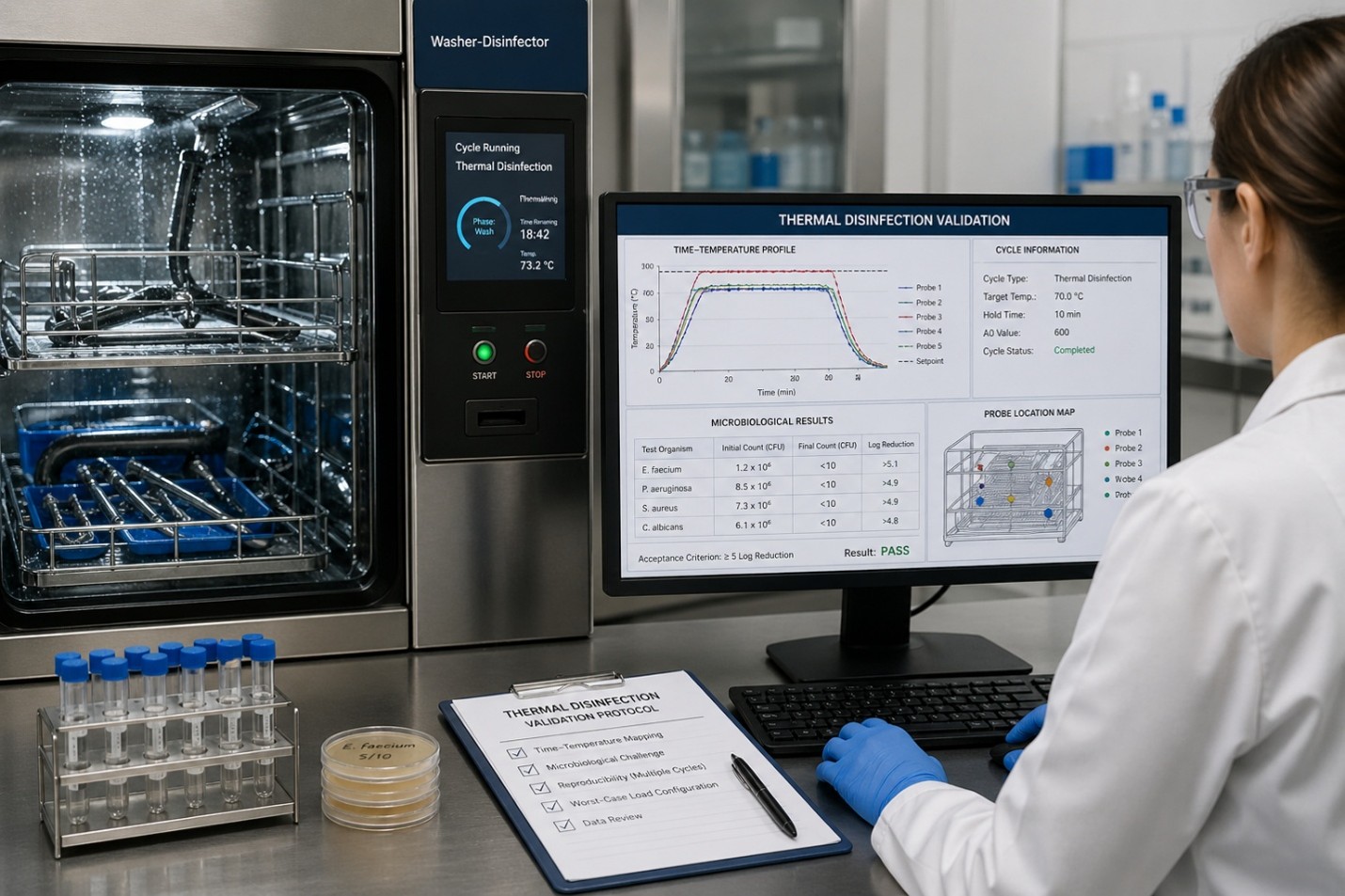
washer-disinfector can reach its setpoint before the devices in the load reach
the required temperature. Hinges, narrow lumens, and densely loaded trays can
affect how water circulates and how quickly different parts of a device heat
up. Time-temperature mapping helps show what those locations actually
experience during the cycle.
How thermal
disinfection works
Thermal
disinfection uses moist heat to inactivate microorganisms after cleaning. For
critical devices such as surgical instruments, it can be a step before
sterilization. For other devices, it can be the final step if it achieves the
required level of disinfection and follows the device’s validated reprocessing
instructions. The device must withstand repeated cycles. Heat-sensitive
endoscopes may require chemical disinfection instead.
Where
applicable, washer-disinfector validation uses A₀, which expresses the
moist-heat exposure delivered over time as equivalent seconds at 80 °C under a
defined model. This lets validation teams evaluate the time-temperature profile
at a challenging location. A single peak temperature cannot show how long that
location was exposed.
What makes a
validation robust?
Regulatory
considerations
The ISO 15883
series set performance and test requirements for washer-disinfectors. Part
1 provides the general requirements, and Part 2 addresses washer-disinfectors
that use thermal disinfection for reusable critical and semi-critical medical
devices. For U.S. submissions, FDA recommends validating the reprocessing
instructions before submission. The documentation FDA expects depends on the
device and submission type.
How SteriLabs
can help
“Planning a
thermal disinfection study for a reusable medical device? Contact SteriLabs to
discuss your device, proposed cycle, and validation needs.”
SteriLabs
supports medical device manufacturers with thermal disinfection validation,
time-temperature mapping, worst-case study design, microbiological efficacy and
bioburden testing, and validation reports to support regulatory submissions.

References:
·
International Organization for
Standardization. ISO
15883-1:2024 — Washer-disinfectors, Part 1. General requirements, terms and
definitions, and tests. iso.org
·
International Organization for
Standardization. ISO
15883-2:2024 — Washer-disinfectors, Part 2. Thermal disinfection of critical
and semi-critical medical devices. iso.org
·
U.S. Food and Drug
Administration. (2015). Reprocessing
Medical Devices in Health Care Settings: Validation Methods and Labeling.
See Sections IX and X for disinfection validation and submission documentation.
The Device Works. Can the Hospital Safely Reprocess It? Why reprocessing validation needs to be part of the plan, and the budget, for new and modified medical devices developed in hospitals, Blog Post by Anas Aljabo
September 21, 2026
Choosing a Medical Device Testing Laboratory: Why ISO/IEC 17025 Accreditation Matters, Blog Post by David Abiola
September 14, 2026
Using Biochemical Assays to Evaluate Medical Device Cleaning Processes. Blog post by Alice Shtutman
August 21, 2026
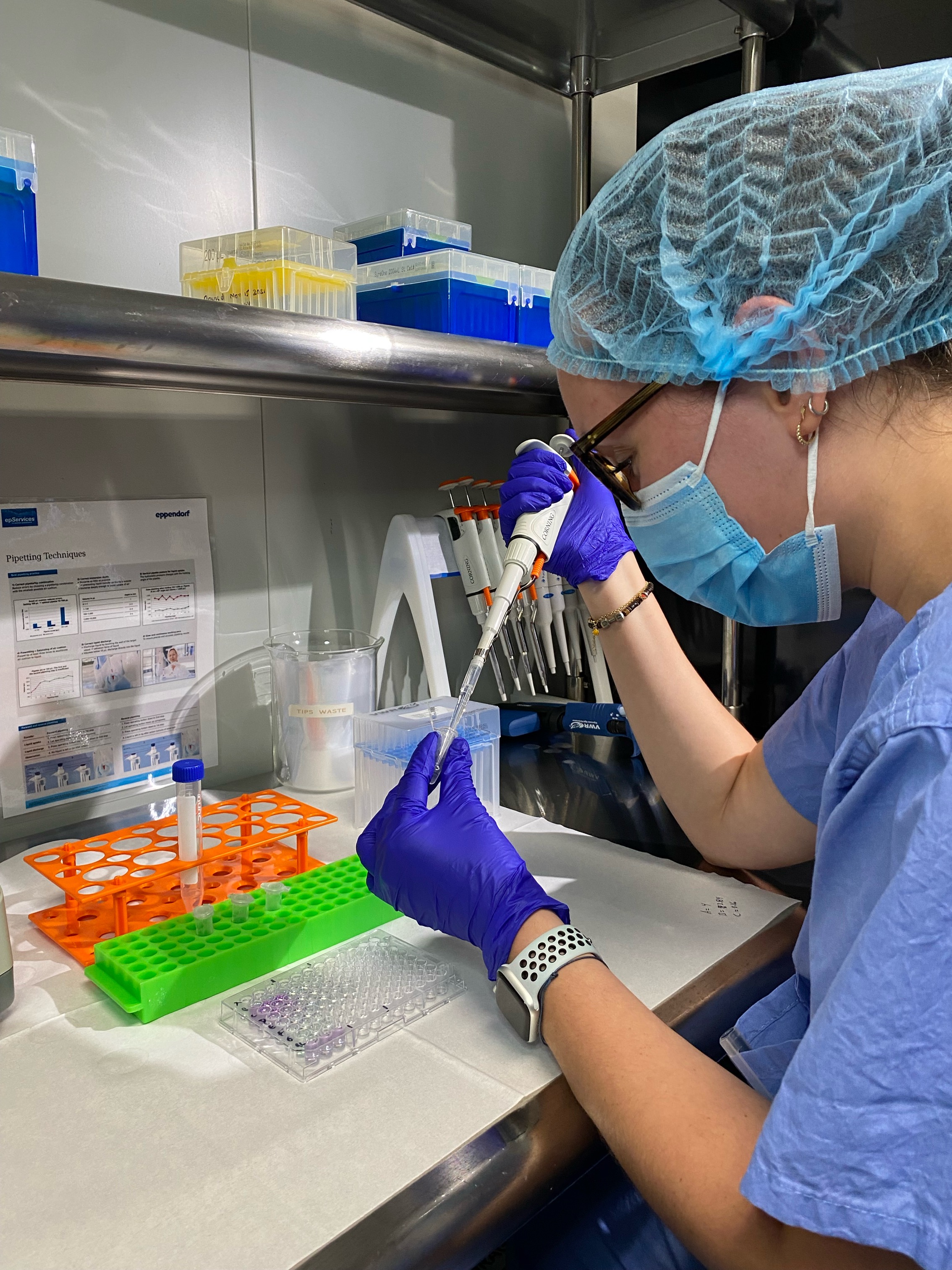
My SteriLabs Experience as an Interdisciplinary Biochemistry and Microbiology Intern. Blog post by Natasha Tal.
September 22, 2025
Microbiologist / Study Lead (Sterilization, Sterility Testing & QMS) — 24-Month Term
September 18, 2025

Media fill testing: Ensuring Aseptic Processing for Client Projects and Licence Applications. Blog Post by Natasha Tal
August 22, 2025

 +1 (905) 766-4051 ex:216

 Prev